
 01: The Challenge
When Timelines Fail.
Traditional construction delays create a secondary crisis for displaced populations.
When Disaster Strikes, Traditional Housing Timelines Fail
Communities displaced by hurricanes, floods, wildfires, and other emergencies can't wait 9 to 18 months for site-built housing to catch up. Temporary shelters and short-term fixes create a second crisis: overcrowded intake centers, prolonged displacement, and rebuilding efforts that stall before they start.
Disaster response needs housing that is both fast to deploy and durable enough to serve as a real bridge to permanent recovery, not another stopgap.
- ✕ Traditional construction can't mobilize fast enough for emergency timelines.
- ✕ Temporary shelters aren't built to code and don't scale to community size.
- ✕ Fragmented vendors and site-built processes slow down agency response.
- ✓ Communities need housing that supports recovery, not just survival.
 02: The Solution
Community Ready.
Engineered as complete, deployable housing systems, not standalone trailers.
Community-Ready Housing, Not Just Individual Units
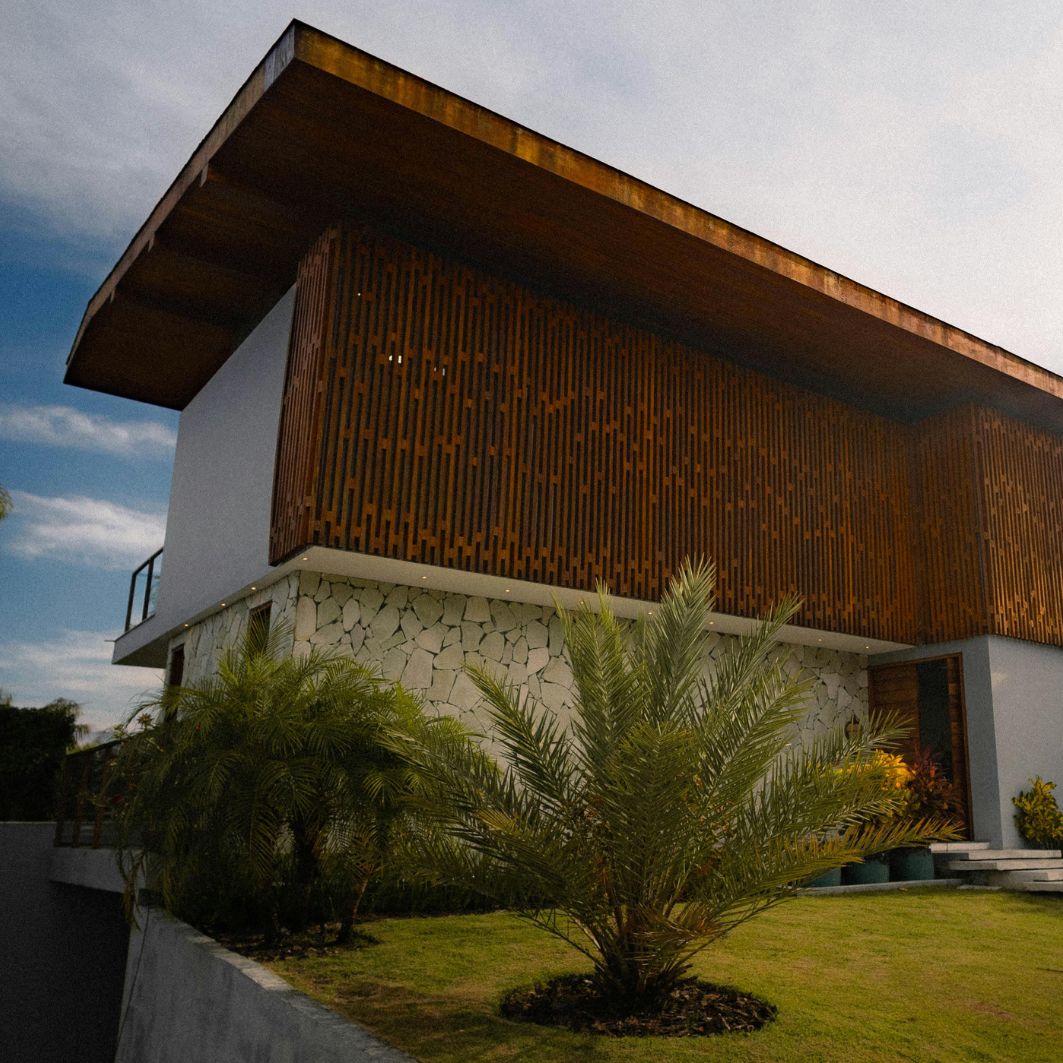
Moduulize disaster relief housing is engineered as complete, deployable housing systems. Each deployment is scoped around the scale of the response needed, ready to integrate immediately with community recovery efforts.
Rapid Deployment
Units are manufactured off-site in a controlled facility ahead of need, then delivered and installed as soon as a site is ready. Timelines measured in weeks.
Community-Ready Infrastructure
Full housing villages. Configurations can include intake centers, storage facilities, and shared community support spaces alongside individual housing.
Built to Code, Built to Last
Engineered to meet local building codes, including wind and structural requirements, to withstand the conditions that caused the disaster.
Scalable Response
Deployments scale efficiently from a handful of rapid-response units to comprehensive, community-scale housing villages.
03: Regulatory Compliance
Permanent Grade.
Satisfying strict residential codes, zoning laws, and resilience requirements.
Meeting the Highest Standards of Permanent Construction
There is a critical difference between a temporary disaster shelter and a permanent modular home. Moduulize disaster relief housing is engineered to serve as a lifelong structural asset for the community it supports. We do not build temporary stopgaps.
Beyond the HUD Code
Unlike manufactured "mobile" homes which are built to federal HUD codes and rest on temporary chassis, our modular structures adhere strictly to the International Residential Code (IRC) and International Building Code (IBC). They qualify as permanent real estate, satisfy local municipal zoning ordinances, and are fully eligible for standard long-term financing and municipal insurance policies.
Seismic & Wind Resilience
Disaster zones require homes that won't fail twice. Our factory-built structures feature fortified shear walls and reinforced modular joints engineered specifically to withstand Category 5 hurricane wind loads and high-tier seismic activity.
FEMA & State Approvals
By utilizing modular construction, building plans are pre-approved at the state level before manufacturing begins. This eliminates local inspection bottlenecks on the ground, allowing emergency deployments to proceed legally and rapidly.
04: Execution & Logistics
Concurrent Build.
How we compress years of rebuilding into an 8 to 16-week window.
Concurrent Construction: The Secret to Rapid Deployment
The traditional construction method is linear and highly vulnerable: you must finish grading the land, pour the foundation, and wait for materials to arrive before framing can even begin. If a storm hits, the entire site stops. Modular construction changes the math by running processes in parallel.
Assessment & Pre-Staging
We work directly with your emergency management team to understand the scale of the response. We immediately begin selecting pre-engineered, state-approved structural layouts that fit the recovery parameters.
Parallel Action: Site Prep & Indoor Manufacturing
This is where the timeline is won. While local contractors are busy clearing disaster debris, grading land, and laying utility connections on-site, Moduulize is simultaneously building the housing units indoors. No weather delays. No material exposure. Precision factory execution.
Delivery & Crane Installation
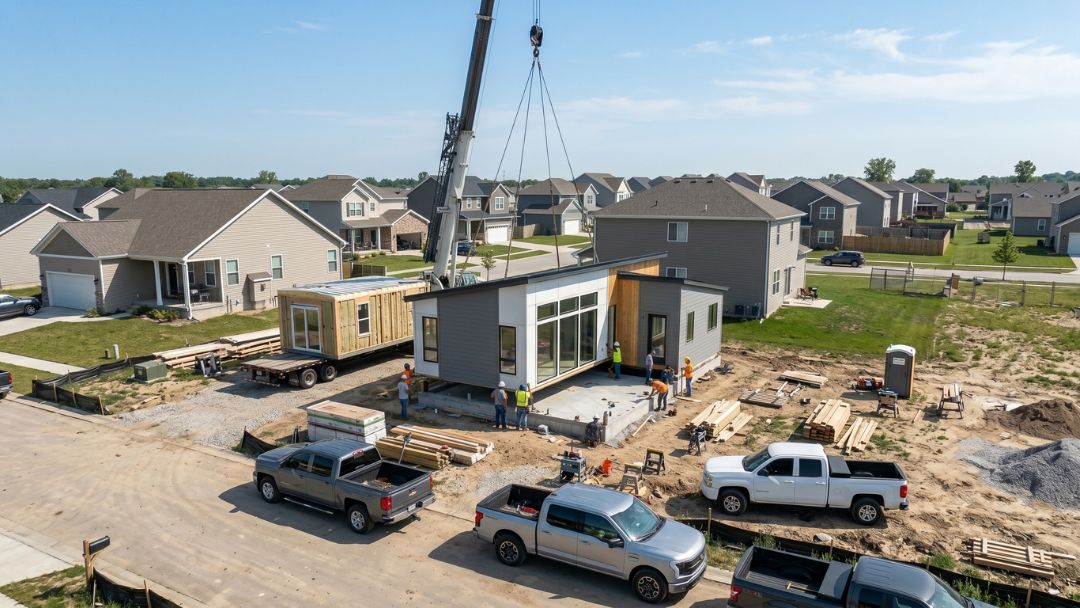
By the time the foundation is poured and the ground is ready, the completed homes arrive. Structural units are securely transported nationwide and craned onto their permanent foundations, often weather-tight within 24 to 48 hours.
Final Utilities & Occupancy
Units are fully connected to local water and power, community infrastructure is activated, and the site is immediately turned over to the agency for occupancy—hitting the 8 to 16-week benchmark seamlessly.
05: Target Partners
Leading Recovery.
Partnering with agencies and groups responsible for stabilizing populations.
Built for the Organizations Leading Recovery
Emergency Management
Agencies coordinating immediate post-disaster housing response and resource allocation.
Government Buyers
Municipal and state governments managing localized, long-term community rebuilding.
NGOs & Relief Orgs
Organizations actively supporting displaced and vulnerable populations through infrastructure.
Contracted Partners
Enterprises with insurance or government contracts requiring a rapid housing supply chain.
06: Performance
The Matrix.
Evaluating Moduulize against traditional construction recovery methods.
Traditional Rebuilding vs. Rapid Deployment Housing
| Traditional Rebuilding | Moduulize Disaster Relief Housing |
|---|---|
| 9 to 18-plus month rebuild timelines | 8 to 16 week deployment timelines |
| Weather-dependent, on-site construction | Manufactured off-site, weather-independent |
| Ad hoc, fragmented vendor response | Turnkey, single-provider deployment |
| Temporary shelters with no long-term value | Permanent-grade housing that supports lasting recovery |
| Difficult to scale to community size | Scalable from single units to full housing villages |
07: Resources
FAQ Database.
Answers regarding modular logistics, code compliance, and deployment operations.
Frequently Asked Questions
08: Build Scope
Initiation.
Coordinate directly with our team to lock in your project budget and response parameters.
When Every Week Matters, We're Ready to Deploy.
Tell us about the response you are coordinating and our team will get back to you within one business day to establish deployment parameters.
Coordinate Deployment
Submit your project parameters and timeline requirements below.